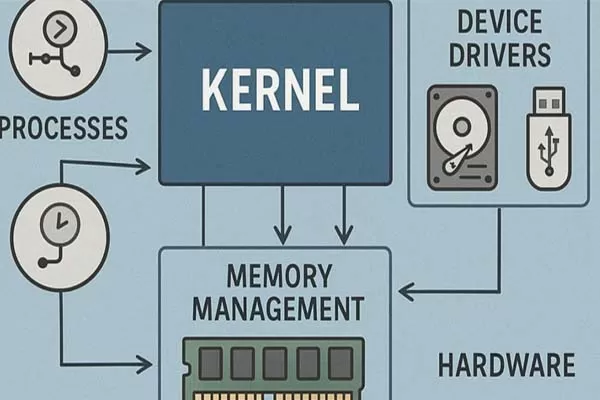
The kernel is the core part of an operating system (like Linux kernel) that directly interacts with hardware and manages system resources. Because of its critical role, introducing entirely new kernels is rare. Instead, existing kernels are continuously improved.
1. Stability Is More Important Than Innovation
Kernels must be extremely stable because even a small bug can crash the entire system. Developing a completely new kernel introduces high risk, so developers prefer improving existing ones rather than replacing them.
2. High Development Complexity
Building a kernel from scratch is extremely complex. It involves:
- Hardware management
- Memory allocation
- Process scheduling
- Security mechanisms
Creating a new kernel requires years of effort and deep expertise, which limits frequent new introductions.
3. Backward Compatibility
Modern systems depend on existing kernels for compatibility with:
- Applications
- Drivers
- Hardware
A new kernel could break compatibility, causing software and devices to stop working.
4. Continuous Improvement Model
Projects like the Linux kernel follow a continuous update model:
- Regular patches
- Security updates
- Performance improvements
This reduces the need to create entirely new kernels.
5. Huge Ecosystem Dependency
Millions of devices—from smartphones to servers—rely on established kernels. Replacing them would disrupt:
- Operating systems
- Cloud infrastructure
- Embedded systems
6. Cost and Resource Constraints
Developing and maintaining a new kernel requires:
- Large development teams
- Long testing cycles
- Continuous maintenance
Most organizations prefer enhancing existing kernels to save cost and effort.
7. Security Risks
New kernels are more likely to have vulnerabilities. Mature kernels have:
- Extensive testing
- Community review
- Proven security models